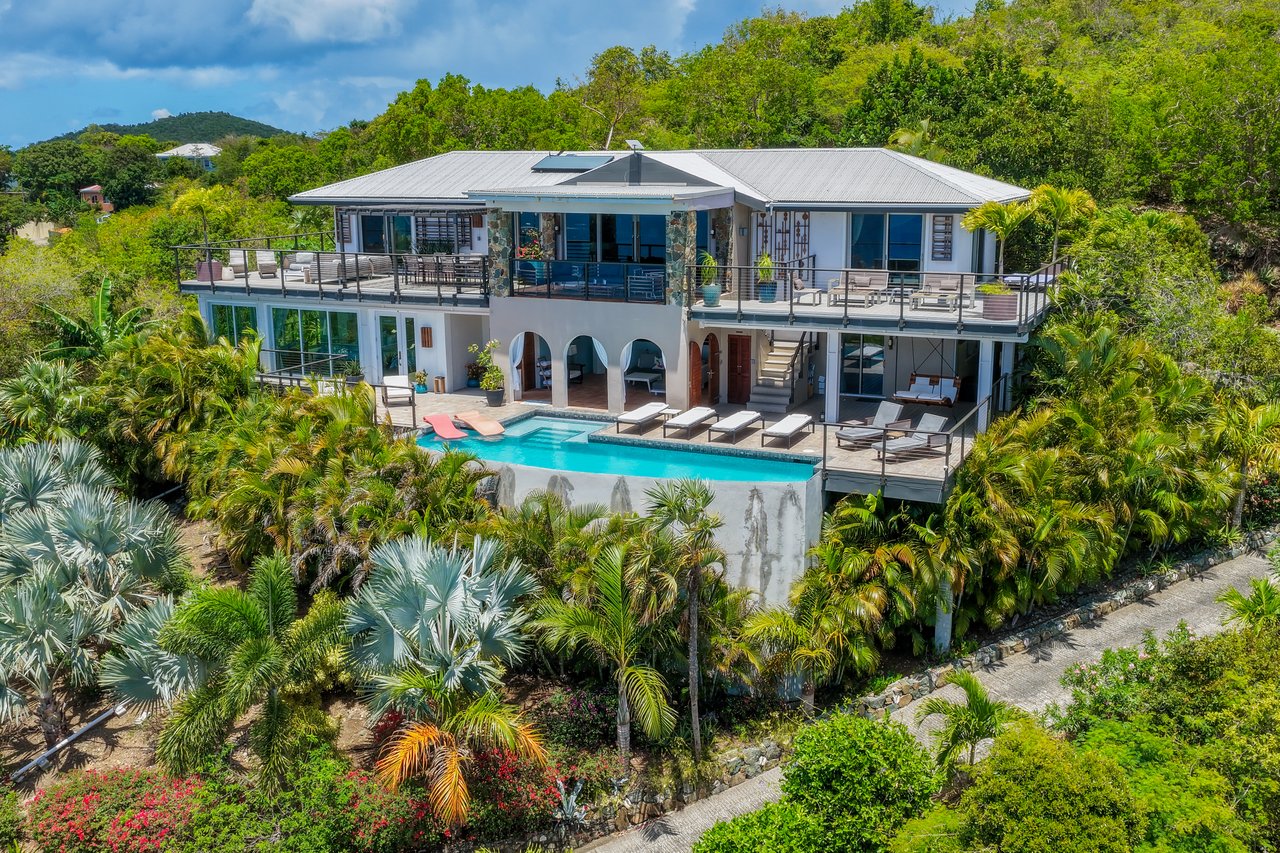
Buying real estate in the U.S. Virgin Islands is, in many ways, like buying property anywhere in the United States. The contracts look familiar, the process has recognizable steps, and the legal framework is American. But there are enough meaningful differences that buyers who come in assuming a standard mainland transaction often find themselves surprised at a critical moment. Here is what to understand before you start making offers.
The USVI Is a U.S. Territory, Not a State
This matters more than most buyers initially realize. The U.S. Virgin Islands operates under its own local laws, its own tax code, and its own real estate regulations. Federal programs that buyers take for granted on the mainland, including certain types of conventional financing. That said, FHA loans and VA loans are still available here!
Most buyers financing a USVI property are working with portfolio lenders, local banks, or financing secured against other assets. Cash transactions are also far more common here than on the mainland. Understanding your financing options before you fall in love with a property is essential.
Property Transfer Tax Is a Real Line Item
The USVI charges a property transfer tax on real estate transactions. The rate scales with the purchase price and is paid at closing. It is not a small number on a high-value property, and it needs to be factored into your total cost calculation from the beginning, not discovered at the closing table.
Your local real estate attorney can walk you through the current rates and structure. Speaking of which...
You Need a USVI-Licensed Real Estate Attorney
Title work, deed preparation, and closing in the USVI requires an attorney licensed in the territory. This is not optional. The good news is that there are excellent attorneys who specialize in USVI real estate transactions and know how to navigate the nuances efficiently. Your broker should have trusted referrals.
Title insurance is also available and strongly recommended. Clear title in the USVI can sometimes involve additional research given the island's history of land transfers, so working with an experienced title and escrow company is not a step to shortcut. Of course, we have all of the contacts for you!
Homestead Exemptions and Property Taxes
Property taxes in the USVI are generally lower than comparable mainland jurisdictions, which is a genuine advantage of ownership here. Understanding how the local tax assessor's office values properties, and how that compares to market value, is worth a conversation with your broker early in the process.
HOA Structures Are Different Here
Many properties on St. John exist within planned communities or condominiums with homeowners associations. USVI HOA law and governance can differ from what mainland buyers are used to. Before purchasing within an HOA, review the financials, the reserve fund, the rules, and any pending assessments. Your broker can help you know what questions to ask.
Everything Takes a Little Longer
Closings in the USVI move on island time, and that is not meant as a criticism. It is simply the reality of a small territory where the pool of attorneys, title companies, and lenders is more limited than in a major metropolitan market. Build buffer into your timeline and resist the urge to set artificially tight deadlines. Deals that close smoothly here do so because everyone involved gave the process room to breathe.
Work With Someone Who Actually Lives Here
This cannot be overstated. The USVI real estate market is hyperlocal in the truest sense. Property values, neighborhood reputations, infrastructure realities, and market timing are all things that require on-the-ground knowledge to assess accurately. A broker who lives on St. John, knows the inventory intimately, and has relationships with the local attorneys, lenders, and title companies is not just an advantage. It is a necessity.
Cruz Bay Realty is St. John's locally owned brokerage. We have been guiding buyers through USVI transactions since 1985 and we know this market from the inside out. Let's talk.